Throughout August 2020, the City of Parramatta Council undertook community consultation around proposed names for a new road and street in the Hill Road Precinct, Sydney Olympic Park. Council conducts community consultation on proposed names to ensure that they reflect current community values.
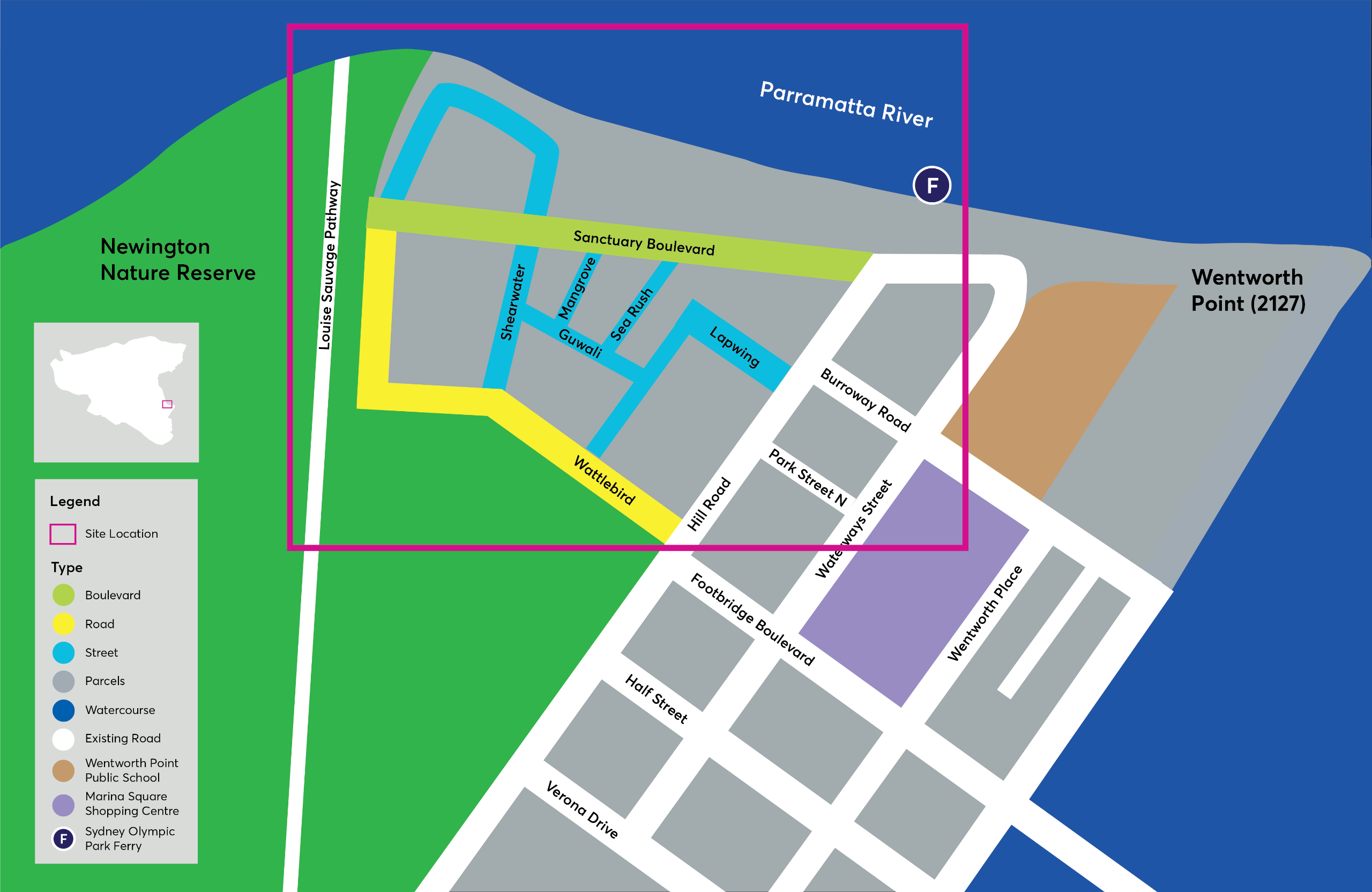
The Hill Road Precinct is located on the most northern point of the peninsular. It is bordered by recently developed sites within Wentworth Point, as well as the Parramatta River and Newington Reserve. Over the next 20 years, the Hill Road Precinct will be transformed into a vibrant new community. Along with transport infrastructure, the precinct is expected to include 2,300 new homes, retail and park facilities.
Council has worked with the NSW Geographical Names Board (GNB) and other key government agencies to identify proposed names that meet a number of requirements including that they do not sound similar to other place names within 10km of the site. The GNB also encourages the creation of distinctive place names that reflect the heritage of the area and are memorable for residents and the wider community.
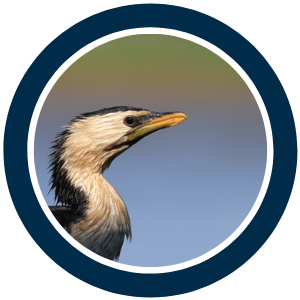
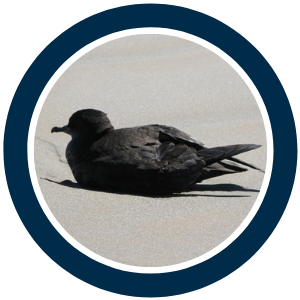
The names proposed for Stage One draw inspiration from woodland and wetland bird species seen in the local area.
Thank you to everyone that contributed to this consultation. Forty-nine responses were submitted via Participate Parramatta with one email submission received during the consultation period.
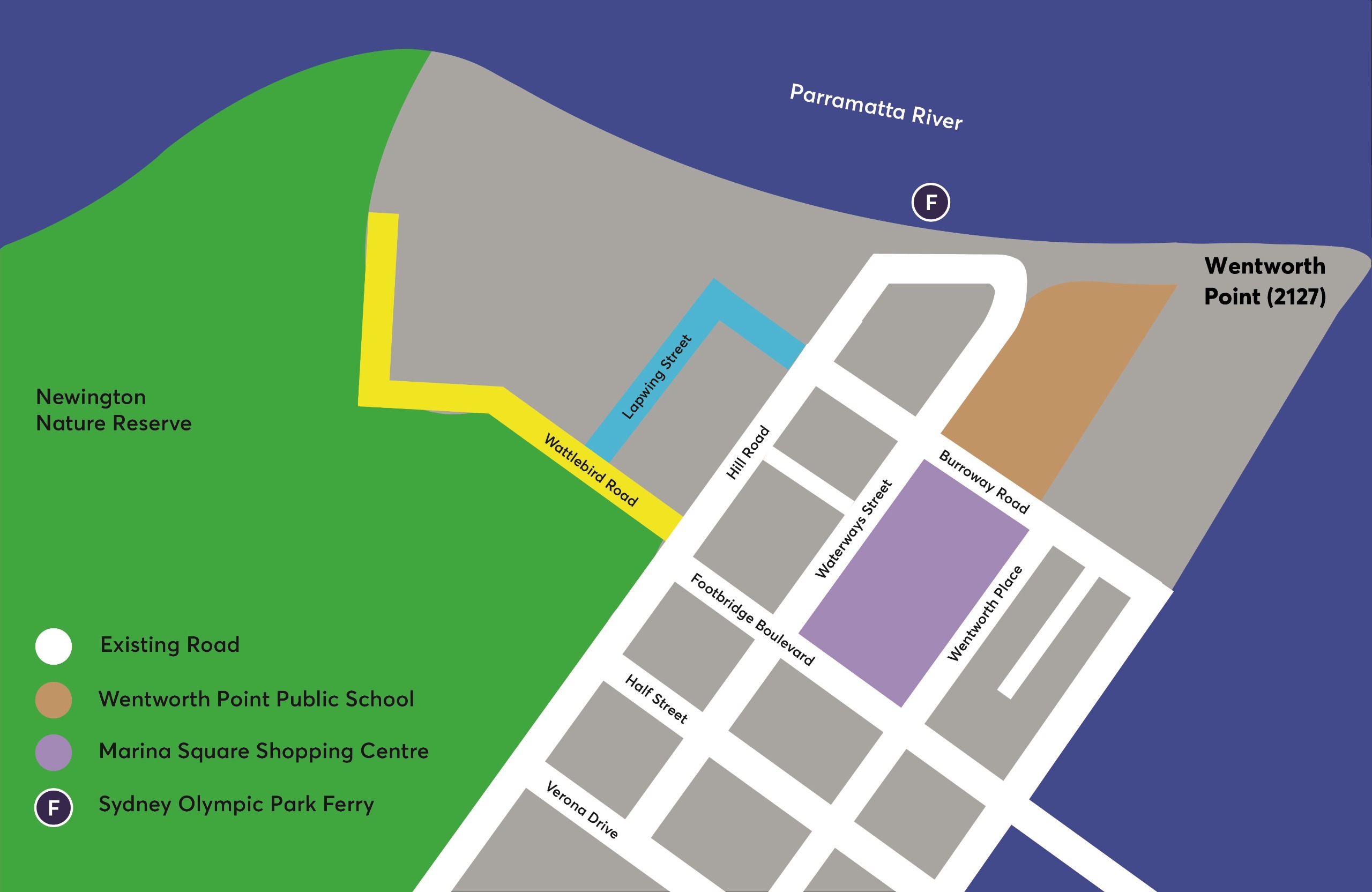
The two names proposed Wattlebird Road and Lapwing Street have now been endorsed by the GNB and will begin to appear on official maps and throughout the precinct shortly.
Please refer to the map below to see where the road and street are located and for a better understanding of why the names were selected, please read the contextual information for each name below.
The Red Wattlebird has a fleshy reddish wattle on the side of the neck, with grey-brown feathers on the body. They have prominent white streaks and yellow on the belly, with a pale face and long tail with a white-tip. They can be found in forests, woodlands and gardens. They mainly feed on nectar and therefore aggressively protect food-bearing plants. The nectar is obtained by probing flowers with their thin curved bill.

Masked Lapwings are large, ground-dwelling birds. They are mainly white below, with brown wings and back, and a black crown. Birds have large yellow wattles covering the face, and are equipped with a thorny spur that projects from the wrist on each wing. The spur is yellow with a black tip. They live in marshes, mudflats, beaches and grasslands and are often seen in urban areas, although generally do not like to be approached by humans.

Frequently Asked Questions
The proposed names were prepared in accordance with Council's Road Naming Policy (no. 283) and the NSW Geographical Names Board Place Naming Policy (2019).
The NSW Geographical Names Board policy ensures that road, street, lane and open space names are broadly acceptable to the community and meet current norms and standards.
The NSW Geographical Names Board encourages place names that reflect the heritage, cultures and identity of a site which makes the place distinctive and memorable for residents and the wider community. As per the NSW Geographical Names Board process, research has been undertaken to identify significant stories and histories of the area.
Ideas for the names were drawn from important bird species that thrive in the area and nearby parklands and wetlands, including Sydney Olympic Park.
As per the NSW Geographical Names Board policy, Council has undertaken preliminary consultation.
The proposed names have been given preliminary suitability by the NSW Geographical Names Board, with Council now undertaking broader community consultation to seek feedback on the precinct names.
The NSW Geographical Names Board has a number of criteria and rules in place, which make it difficult for some name submissions to be effective. For example, name suggestions must be as site specific and contextually accurate as possible, not have duplicates within a 10km radius and must also meet emergency services, postal and navigation requirements.
The Geographical Names Board of NSW ‘NSW Road Naming Policy’ outlines the guidelines for naming roads. The guidelines can be accessed at www.gnb.nsw.gov.au. In summary, proposed names should be:
- Unique - the name should not already exist in the Local Government Area or neighbouring Local Government Areas
- If naming after a person, the person cannot be living and first names are to be avoided
- Not be offensive or likely to cause offense
- Appropriate to the physical, historical and cultural character of the local area
- Cannot be a company or business name
- Must be easy to read, spell and pronounce
- Use of hyphens should be avoided
- Should include an appropriate road type suffix e.g. road, street, avenue
- In most cases should only be one word, however two may be appropriate if required for the geographical relationship of the road, e.g. New England Highway.
Council supports the recognition of Dharug, Aboriginal and Torres Strait Islander heritage of Parramatta in place naming and is seeking to work with Dharug traditional custodians to prepare Dharug names for Stage 2 of the Hill Road Precinct.
Acknowledging a local person through naming streets, roads, lanes and open spaces is not always possible due to the rules set by the NSW Geographical Names Board including that first names are to be avoided and the person cannot be alive.
Council will review the community feedback and confirm the final selection before submitting to the NSW Geographical Names Board for consideration and endorsement.
The names endorsed during Stage 1 consultation will be placed on signs in the precinct and be made available on official maps shortly.